
This House Supports the Right to Die.

right to die

The 19th Ordinary Meeting of the 165th Session of the Literific took place on the 20th of March in the Senate Room.

Vincent Wooding, Jack Thompson and Naomh Gibson spoke in proposition. Wooding argued that it is unfair to trust a person to do things within society but not allow them the ability to choose how they die. Thompson explained active and passive euthanasia to the House and that dying is a phase. He said that doctors have become good at extending the dying phase which is not in the best interests of the patient. Gibson question how learned the proposition were. Instead of worrying about the required model she asked the House to concentrate on the right to control the last part of your life when so much is out of your hands.

Sammy Wade, Nathan Cantley and Nathan Anderson opposed the motion. Wade argued that it would undermine the basic function of the legal and health authorities which exist to protect life. Cantley said that society is confused about the right to die, that there are no guidelines and no framework for us to be able to support it. Anderson said that everyone has their own perspectives on it but that he believed vulnerable people should be given the best possible care as opposed to the right to die.

The floor debate ensued, summaries were heard and after a vote the motion passed.
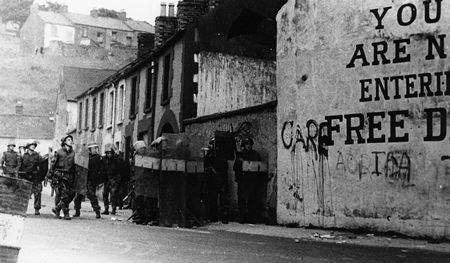
This House Believes Internment was a Necessary Evil

internment

The 17th Ordinary Meeting of the 165th session of the Literific took place on the 6th of March in the Senate Room. Our guest chair for the evening, Professor John Brewer, had a few opening remarks.

Ryan Jones and Andrew Carruthers proposed the motion. Jones argued that internment is a legitimate tool of war and that the only more effective alternative is extermination. He said it may have been evil but there was no other way to deal with insurgency. Carruthers said that interment showed the people the immorality of Britain and that this forced them to make their voices heard. t forced the people to demand more.

Katy Waller and Harry Adair took centre stage to staunchly oppose internment. Waller told the House that internment took away the rights of stability and movement. Instead of protecting the people, it encourages them to see the state as something to be feared. She said that something that takes rights away should never be seen as necessary. Adair then closed the debate. He said internment was detrimental to community relationships.  The alternative to internment, he argued, was to not put innocent people behind bars.

Professor Brewer then summarised and commented on the speeches. Closing statements were heard and the House then went to a vote. The motion was defeated.

This House Would Make a Musical

musical


The 16th Ordinary Meeting of the 165th Session of the Literific took place on the 27th of February in the Senate Room. Ciarán Gallagher ended a riff off by starting Bohemian Rhapsody which then turned into a group singing thing with piano played by Henry Adams.

Ciarán Gallagherand Paul Shannon were the proposition. Ciaran had a speech but was interrupted by bagpipes and the arrival of our favourite German Sebastian Eckert. His actual argument was quite good and serious and focused on the uniqueness of musicals and how they consist of wonderful things. Shannon then continued for the proposition. He commented on the shambolic nature of the evening before moving on to his three reasons for supporting the motion, his reasons three. There was singing, logic and observations of the Literific council.

Ben Murphy and Jonny Finlay opposed musicals! Murphy felt musicals contained an unnerving amount of optimism and that they do not reflect life as it is since life can be kind of terrible. Finlay begged us not to waste membership money on a musical that would just end up as gifs on Tumblr. Instead he recommended creating a blockbuster movie, suggested titles being Adam Potter and the Standing Order of the Phoenix or Doctor Whom. Both titles were accompanied by detailed descriptions.

The debate then went to the floor. We then went to a vote and the motion passed.