Comedy Debate: This House Would Be a Student

The 21st Ordinary Meeting of the 165th session of the Literific took place on the 3rd of April in the Senate Room. The motion was This House Would Be a Student and saw three comedians battle against three students. Oh yeah.

George Quinn opened the debate for the supposedly funny people. He talked about how depressing his life is but more importantly there was magic. He said students are lucky to do what they like, to not have a job and to not have to feel guilty about it. Viorel Vlad spoke from a postgraduate point of view, remembering the days of undergraduate. We need people with all that time on their hands to progress humanity and serve you your food. Neil Dickson compared his life with that of his friends that went to university. He brought up the unique ability of students to go out five days a week and the greatness of learning about random stuff.

Cap’n Gallagher, going against his Union responsibilities, opened for the opposition. He argued that you can learn without a university and that uni is so messed up that this one has elected a crazy pirate as it’s union president. Emily Walker compared student life to old age, the ability to lie in bed all day, being able to have a carer, getting drugs for free, frickle frackling and lots of money to go wild with. Derek Crosby compared education to prison. He added not only do you learn most of your material from online sources over lectures but you will be an expert on nothing and everything you love will suffer. 

The debate then went to the floor. The motion passed on a vote.

This House Supports the Right to Die.

right to die

The 19th Ordinary Meeting of the 165th Session of the Literific took place on the 20th of March in the Senate Room.

Vincent Wooding, Jack Thompson and Naomh Gibson spoke in proposition. Wooding argued that it is unfair to trust a person to do things within society but not allow them the ability to choose how they die. Thompson explained active and passive euthanasia to the House and that dying is a phase. He said that doctors have become good at extending the dying phase which is not in the best interests of the patient. Gibson question how learned the proposition were. Instead of worrying about the required model she asked the House to concentrate on the right to control the last part of your life when so much is out of your hands.

Sammy Wade, Nathan Cantley and Nathan Anderson opposed the motion. Wade argued that it would undermine the basic function of the legal and health authorities which exist to protect life. Cantley said that society is confused about the right to die, that there are no guidelines and no framework for us to be able to support it. Anderson said that everyone has their own perspectives on it but that he believed vulnerable people should be given the best possible care as opposed to the right to die.

The floor debate ensued, summaries were heard and after a vote the motion passed.

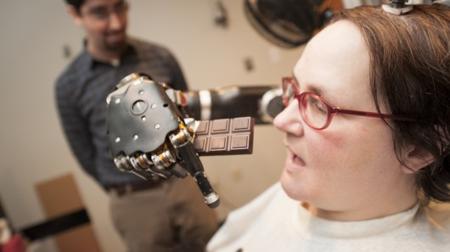
This House Would Welcome a Bionic Humanity

10006449_682356691807940_260036856_n


The 18th Ordinary Meeting of the 165th session of the Literific took place on the 13th of March in the Senate Room.

Jonny Finlay, Oran Kennedy and Paddy Mallon spoke in favour of bionic humanity. Finlay opened the debate saying that we already have bionic humanity. He argued it was good for advancing humanity and that in this way it is a part of natural evolution. Kennedy said that on a level the input of film, literature and video games has made us realise how wonderful bionic humanity can be. He said that if the technology exists to help a person we cannot deny them it and that ultimately it allows humanity to progress. Mallon determined by welcoming bionic humanity people could have a second chance at work and life but that it was also sheer awesome.

Calvin Black, Owen Wright and Nick Millington all opposed the motion! Black mentioned the increase in selling limbs and being attacked and also how much easier it would be to kill someone if you had guns in your limbs (hence shooting President Kydd, which he did, with a toy gun). Wright warned the House of the dangers of bionic humanity and determined that it would reinforce the divide between classes as the rich would have it first and do we really want a robotic Donald Trump? Millington said bionic humanity was a concern and that currently we are limited by our technology but that we will advance rapidly in the coming years

The debate then went to the floor. We went to a vote and the motion passed.